
To watch the full webinar click here
Fraud is getting faster, more sophisticated, and harder to catch.
As instant payments continue to grow, the way platforms think about fraud prevention is fundamentally shifting. More threats are arriving, at every point of the transaction lifecycle — not just during the moment of the transaction.
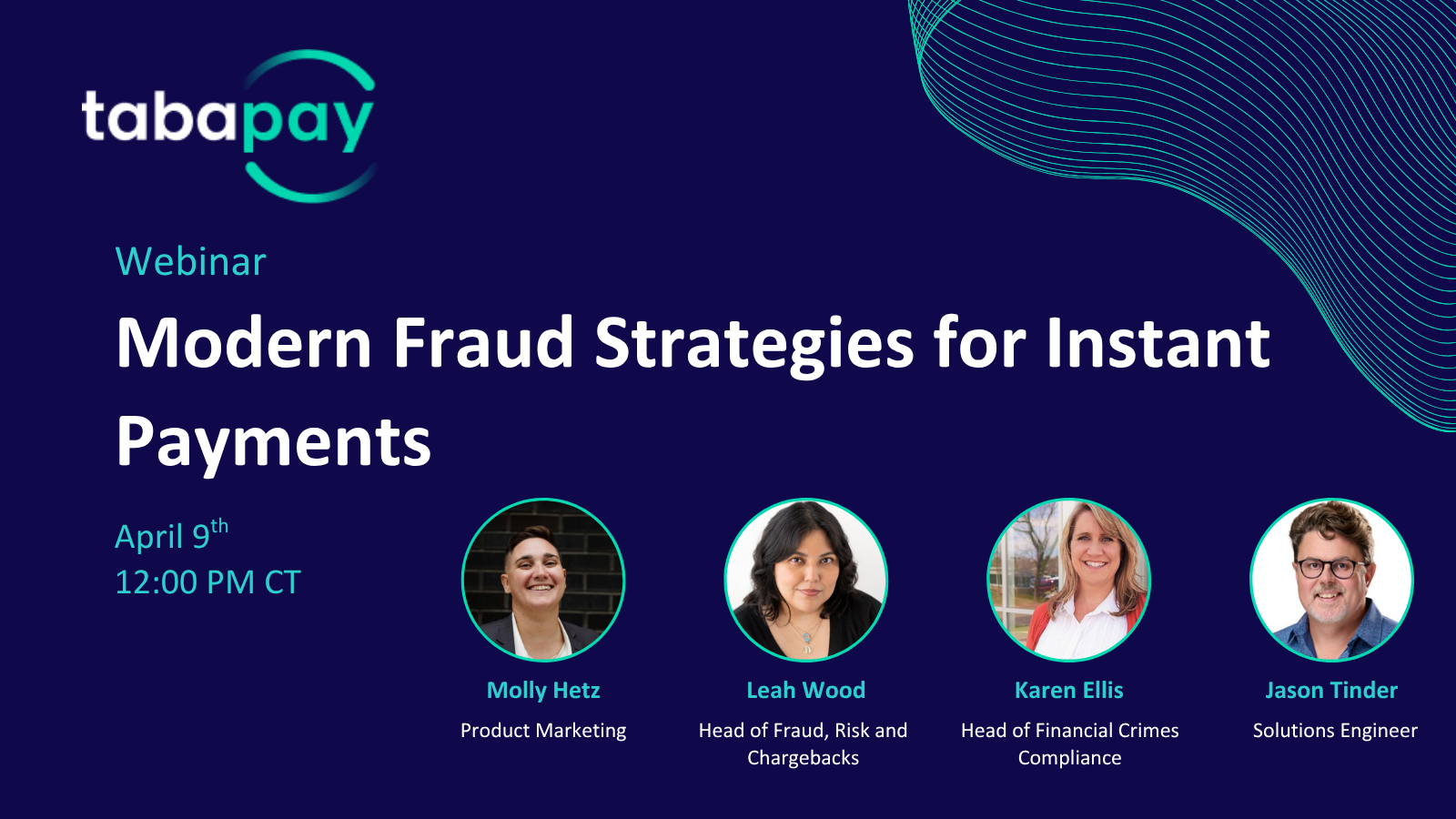
TabaPay’s fraud, compliance, and solutions experts came together in our latest webinar to unpack what fraud looks like in 2026, and how leading platforms are adapting.
Fraud Is Moving Beyond the Transaction
Fraud is traditionally viewed as something that happens during a transaction. But it’s now happening before and after transactions as well.
Today, fraud shows up across the entire lifecycle; as early as onboarding, to as late as the payout phase. Companies that don’t acknowledge this are leaving themselves vulnerable to bad actors.
Fraud during payouts is growing alongside the popularity of real-time payments and push-to-card disbursements. The margin of error is alarmingly slim; once funds get disbursed, recovery options are often limited.
Speed Is Raising the Stakes
Instant payments have changed expectations for both customers and fraud teams.
There’s less time to review, less time to react, and far less room for error. By the time a chargeback or dispute appears, the issue has already happened—sometimes weeks earlier.
That’s why prevention is becoming more proactive, real-time, and layered than ever before.
A Smarter, Layered Approach
There’s no single tool that solves fraud—and that’s one of the most important takeaways from the session.
Instead, leading platforms are combining multiple signals and strategies across the lifecycle, including:
- Strong identity and onboarding controls
- Real-time transaction monitoring
- Risk-based authentication and decisioning
- Ongoing analysis of fraud and chargeback trends
The goal isn’t to block more transactions—it’s to block the right ones while keeping the experience seamless for good customers.
Watch the Full Webinar
This is just a snapshot of what we covered.
In the full session, our team dives deeper into:
- Emerging fraud trends across fintech, gaming, and embedded finance
- How fraud is evolving across the customer lifecycle
- A real-world case study on reducing chargebacks and improving conversion
- Practical strategies you can apply to your own program